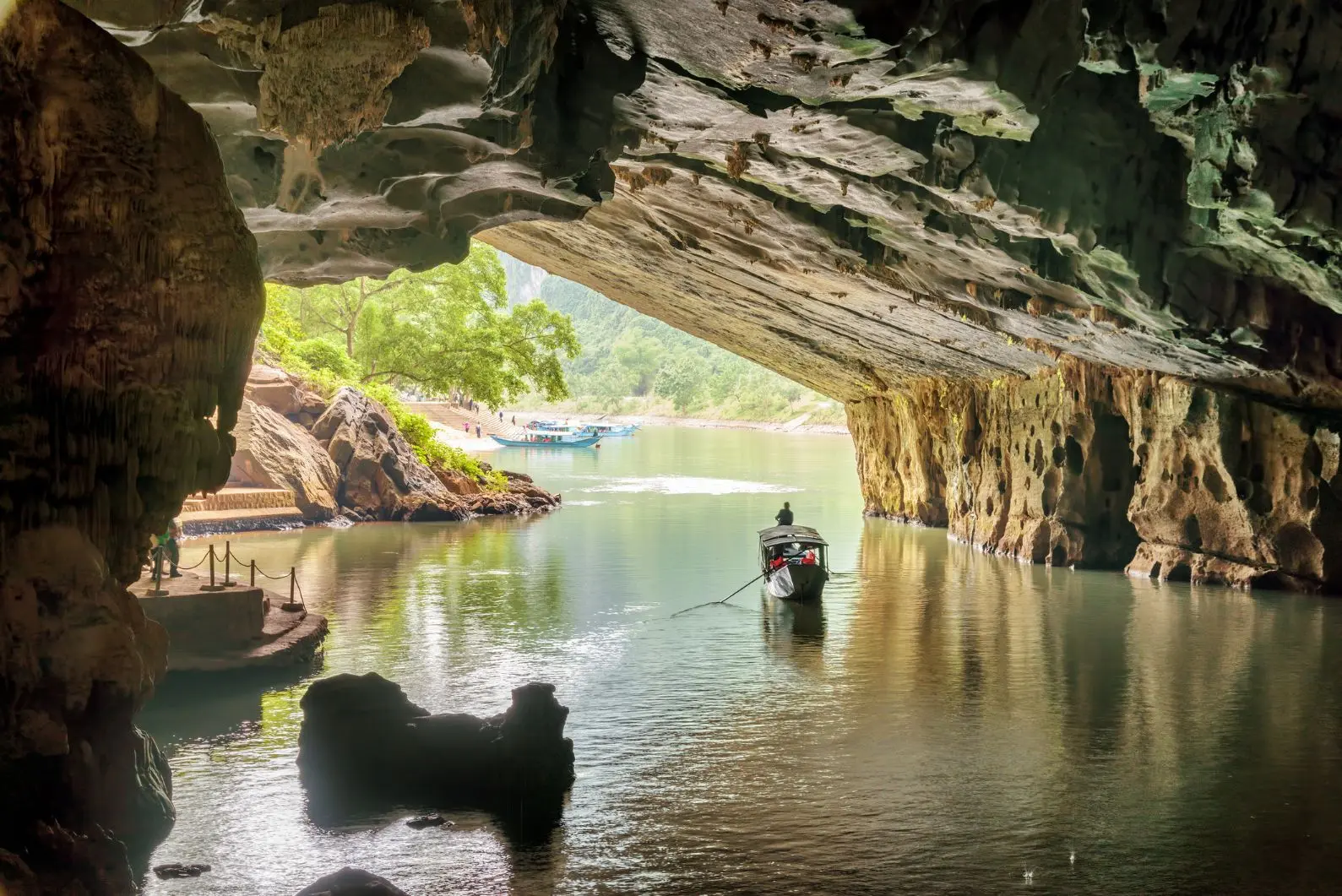
Deep in Vietnam’s northern highlands, the rugged terrain of Ha Giang province hides terraced rice fields that cascade like emerald staircases down sheer cliffs, where Hmong villagers still weave intricate textiles by lantern light. Farther south, the isolated Con Dao Islands boast empty white-sand beaches fringed by turquoise waters, perfect for snorkeling among sea turtles without a soul in sight. In the central highlands, descend into Son Doong Cave—the world’s largest cavern—where sunlight pierces a hidden jungle canopy teeming with rare wildlife. These unexplored pockets offer intrepid travelers profound encounters with Vietnam’s untamed spirit, free from the clamor of Hanoi or Halong Bay.
Beyond the Usual Tourist Trail
Vietnam is often imagined through postcard-perfect images of Ha Long Bay, the lantern-lit streets of Hoi An, the buzzing energy of Ho Chi Minh City, or the misty rice terraces of Sapa. While these destinations are undeniably beautiful, they represent only a fraction of what the country has to offer. Beyond the familiar routes lies a Vietnam that is quieter, rawer, and deeply authentic—a land of hidden valleys, forgotten kingdoms, remote islands, and communities where time seems to move at its own pace.
This blog explores lesser-known and unexplored places in Vietnam that remain largely untouched by mass tourism. These destinations offer travelers the chance to experience Vietnam in its most genuine form, where nature dominates the landscape and cultural traditions continue uninterrupted by crowds.
1. Ta Xua: The Cloud Paradise of Northern Vietnam
Tucked away in Son La Province, Ta Xua is a remote mountainous region that remains relatively unknown outside Vietnam. While it has slowly gained popularity among Vietnamese backpackers, it is still far from being a mainstream destination.
Ta Xua is best known for its mesmerizing sea of clouds, especially during the winter and early spring months. At dawn, thick layers of clouds roll across jagged mountain ridges, creating a surreal landscape that feels otherworldly. Unlike Sapa, Ta Xua retains its raw charm, with limited infrastructure and minimal commercialization.
The journey to Ta Xua is an adventure in itself, involving winding mountain roads, dramatic cliffs, and breathtaking views. Along the way, travelers encounter small Hmong villages where daily life revolves around farming, tea cultivation, and livestock. Homestays here are simple but warm, offering a rare opportunity to connect with local families.
For those seeking solitude, nature, and an unfiltered mountain experience, Ta Xua is a hidden gem worth discovering.
2. Pu Luong Nature Reserve: A Quieter Alternative to Sapa
Located in Thanh Hoa Province, Pu Luong Nature Reserve is often overlooked by international travelers. Yet, it rivals the beauty of northern Vietnam’s most famous destinations, offering terraced rice fields, lush jungles, and traditional stilt houses.
What sets Pu Luong apart is its tranquility. The landscape is dotted with small Thai and Muong ethnic villages, where traditional farming methods have remained unchanged for generations. Bamboo water wheels, still used for irrigation, line the rivers and create a peaceful rhythm that defines the region.
Hiking through Pu Luong is a sensory experience—mist rising from the valleys, the sound of flowing streams, and the scent of wild herbs in the air. Unlike crowded trekking routes elsewhere, trails here often feel entirely private.
Pu Luong is ideal for travelers who want to immerse themselves in nature without sacrificing cultural depth. It offers a slow, mindful travel experience that is increasingly rare in today’s fast-paced tourism industry.
3. Nam Du Islands: Untouched Beauty in the Gulf of Thailand
While Phu Quoc dominates Vietnam’s island tourism, the Nam Du archipelago remains largely unexplored. Located off the coast of Kien Giang Province, Nam Du consists of over 20 small islands, many of which are uninhabited.
The islands boast crystal-clear waters, white sandy beaches, and vibrant coral reefs. Unlike more commercialized destinations, Nam Du has limited resorts and retains a rustic charm. Fishing villages form the heart of island life, and visitors often wake to the sight of colorful boats heading out to sea.
Electricity on some islands is limited, which adds to the sense of escape. Evenings are quiet, illuminated by starlight rather than neon signs. Fresh seafood, caught daily, is the highlight of local cuisine.
Nam Du is perfect for travelers seeking raw coastal beauty and a digital detox. It represents a side of Vietnam’s islands that is rapidly disappearing elsewhere.
4. Kon Tum: The Soul of the Central Highlands
The Central Highlands of Vietnam remain one of the country’s least visited regions, and Kon Tum is among its most fascinating provinces. This area is home to diverse ethnic minority groups, including the Ba Na, Xo Dang, and Jarai, each with distinct languages, rituals, and architecture.
Kon Tum is known for its traditional rong houses—communal wooden structures with towering roofs that serve as cultural centers. These houses are not tourist attractions but living spaces where ceremonies, meetings, and celebrations take place.
The landscape here is defined by rolling hills, coffee plantations, rivers, and dense forests. Unlike Da Lat, Kon Tum has avoided becoming overly tourist-oriented, preserving its authentic character.
Visitors can explore remote villages, attend local festivals if timed right, and learn about traditional weaving, farming, and spiritual beliefs. Kon Tum offers a deep cultural journey rather than a sightseeing checklist.
5. Hoang Su Phi: Vietnam’s Most Underrated Rice Terraces
When discussing rice terraces in Vietnam, Sapa and Mu Cang Chai usually dominate the conversation. However, Hoang Su Phi in Ha Giang Province offers some of the most dramatic and least crowded rice terraces in the country.
Carved into steep mountainsides over centuries, these terraces are a testament to human resilience and ingenuity. During the harvest season, the landscape transforms into a golden mosaic, stretching as far as the eye can see.
Hoang Su Phi remains difficult to access, which has helped preserve its untouched beauty. Roads are narrow and challenging, but the reward is an immersive experience in a region where tourism is still in its infancy.
Staying in local homestays allows travelers to experience daily life with ethnic communities such as the Dao and Nung. Meals are often shared, stories exchanged, and traditions passed down orally.
6. Tuy Hoa: Coastal Vietnam Without the Crowds
Tuy Hoa, the capital of Phu Yen Province, is a coastal city that rarely appears on international travel itineraries. Yet, it offers stunning beaches, rugged cliffs, and a laid-back atmosphere that feels refreshingly untouched.
The coastline around Tuy Hoa features dramatic rock formations, hidden coves, and fishing villages where life revolves around the sea. Bai Mon and Dai Lanh beaches, in particular, are known for their pristine beauty and minimal crowds.
Sunrises here are spectacular, with fishermen hauling in their nets as the sky glows in shades of pink and orange. Unlike popular beach destinations, Tuy Hoa retains a strong local identity, with street food stalls serving regional specialties.
For travelers seeking coastal charm without commercialization, Tuy Hoa is an ideal destination.
7. Bac Ha: Beyond the Famous Market
Bac Ha is often associated with its colorful Sunday market, but few travelers venture beyond this single attraction. Located in Lao Cai Province, Bac Ha offers a deeper cultural experience for those willing to explore.
The surrounding countryside is home to Flower Hmong, Tay, and Phu La communities. Rolling hills, plum orchards, and quiet villages create a pastoral landscape distinct from Sapa’s dramatic peaks.
Trekking routes here pass through remote hamlets where traditional clothing is still worn daily. Bac Ha also has historical significance, with remnants of colonial-era architecture and ancient fortifications.
By staying longer and venturing beyond the market, travelers can experience Bac Ha as a living cultural landscape rather than a brief photo stop.
8. Lak Lake: A Peaceful Highland Retreat
Lak Lake, located in Dak Lak Province, is one of the largest natural freshwater lakes in Vietnam. Despite its beauty, it remains largely overlooked by international tourists.
The lake is surrounded by small M’nong villages, where stilt houses line the water’s edge. Traditional fishing methods, wooden canoes, and water buffalo remain integral to daily life.
Early mornings at Lak Lake are serene, with mist hovering above the water and birds calling from nearby forests. Cycling around the lake or taking a slow canoe ride offers a chance to absorb the area’s calm rhythm.
Unlike more developed highland destinations, Lak Lake has preserved its quiet, making it perfect for travelers seeking reflection and rest.
9. Phong Nha’s Lesser-Known Caves and Villages
Phong Nha-Ke Bang National Park is famous for its massive caves, but most visitors only see a small portion of what the region offers. Beyond the well-known attractions lie lesser-explored caves, jungle trails, and rural villages.
Villages along the Son River offer a glimpse into rural Vietnamese life, where farming and fishing remain central. Cycling through these villages reveals limestone karsts rising dramatically from rice fields.
Exploring lesser-known caves with local guides provides a more intimate adventure, free from crowds. These experiences emphasize conservation and respect for nature rather than spectacle.
This quieter side of Phong Nha appeals to travelers who value depth over adrenaline.
10. Chau Doc’s Floating Life Beyond Pilgrimage Tourism
Chau Doc, located near the Cambodian border, is often visited for religious pilgrimages. However, beyond these sites lies a fascinating world of floating villages and river-based culture.
The Mekong River shapes life here, with homes, markets, and schools built on water. Ethnic Cham and Khmer communities add to the region’s cultural diversity.
Traveling by boat through the floating villages reveals a way of life adapted entirely to the river’s rhythms. This perspective offers insight into southern Vietnam’s multicultural heritage.
Conclusion: Discovering the Real Vietnam
Unexplored places in Vietnam offer more than scenic beauty—they provide meaningful connections to people, traditions, and landscapes that remain largely untouched by mass tourism. These destinations challenge travelers to slow down, observe, and engage with Vietnam beyond surface-level experiences.
By venturing off the beaten path, visitors not only enrich their own journeys but also support sustainable tourism that benefits local communities. Vietnam’s true magic often lies in its quiet corners, waiting patiently to be discovered by those willing to look beyond the obvious.
In exploring these hidden destinations, travelers uncover a Vietnam that is authentic, resilient, and profoundly inspiring.
Leave a Reply