There are few experiences in India as humbling and awe-inspiring as standing beside an elephant in the quiet hush of a forest morning. The ground trembles slightly under its massive feet, the air smells faintly of damp earth and bamboo, and somewhere in the distance, a hornbill calls from the canopy. In that moment, time slows down. The forest breathes. And you realize that you are merely a visitor in a world that has existed long before you arrived.
Welcome to Mudumalai — a land where ancient forests, tribal traditions, and wildlife conservation intersect. Nestled in the Nilgiri Hills of Tamil Nadu, Mudumalai Tiger Reserve is one of South India’s most treasured wilderness areas. But beyond the jeep safaris and wildlife sightings, there lies an experience that touches something deeper within us: the art of elephant whispering.
Spending a weekend in the Mudumalai wilds, observing and interacting with elephants under the guidance of experienced mahouts, offers a rare glimpse into the lives of these gentle giants and the people who care for them. It is not just about wildlife tourism; it is about connection — between humans, animals, and nature.
This is the story of a weekend spent among elephants.
The Wild Heart of the Nilgiris
Mudumalai Tiger Reserve sits at the crossroads of three states: Tamil Nadu, Karnataka, and Kerala. It forms a vital part of the Nilgiri Biosphere Reserve, one of India’s largest protected forest ecosystems.
The reserve shares borders with several famous wildlife parks:
- Bandipur National Park (Karnataka)
- Wayanad Wildlife Sanctuary (Kerala)
- Nagarhole National Park (Karnataka)
Together, these forests form a massive wildlife corridor that allows animals — especially elephants — to migrate freely across the Western Ghats.
The landscape here is breathtakingly diverse. Dry deciduous forests blend into moist bamboo groves, patches of grassland open up between thick woodland, and seasonal streams carve their way through the terrain. During the monsoon months, the forest becomes lush and vibrant, while in summer the trees shed their leaves, revealing hidden wildlife.
Mudumalai is home to an extraordinary range of animals:
- Asian elephants
- Bengal tigers
- Indian leopards
- Gaur (Indian bison)
- Sloth bears
- Wild dogs (dhole)
- Sambar deer
- Spotted deer
- Malabar giant squirrels
- Hundreds of bird species
But it is the elephants that dominate the landscape — both physically and culturally.
The Elephant Camps of Mudumalai
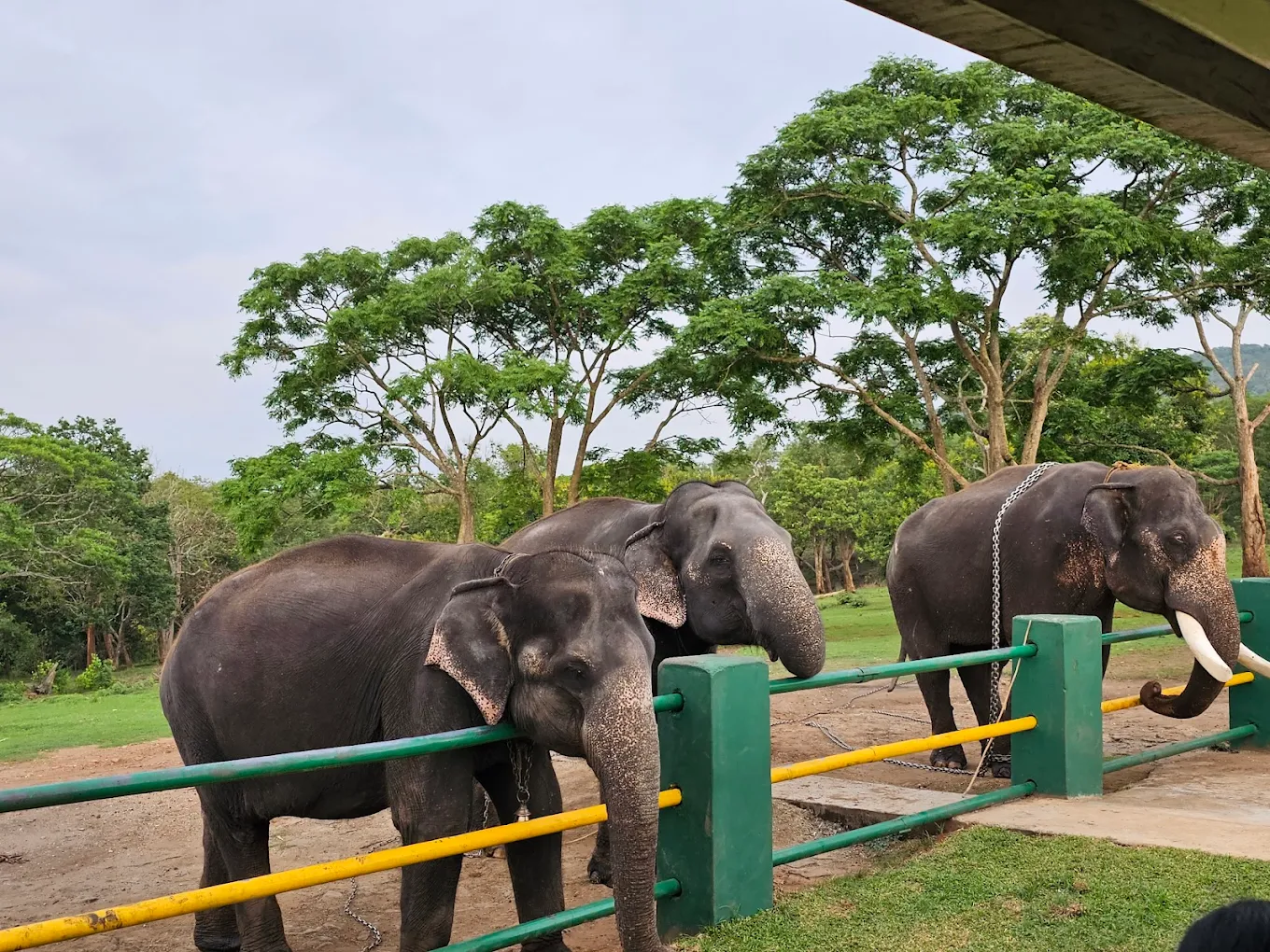
One of the most unique aspects of Mudumalai is its elephant camps. These camps house trained elephants that assist the forest department in various conservation activities.
The most famous among them is the Theppakadu Elephant Camp, located along the Moyar River. Established over a century ago, it is one of the oldest elephant camps in Asia.
Here, elephants are trained and cared for by mahouts — skilled handlers who form deep bonds with the animals.
The camp plays an important role in:
- Forest patrols
- Anti-poaching operations
- Rescue missions
- Managing wild elephant herds
- Tourism education
Visitors can observe feeding sessions and bathing rituals, offering a fascinating insight into the relationship between humans and elephants.
But to truly understand elephants, one must go beyond observation. That is where the concept of “elephant whispering” comes in.
What Is Elephant Whispering?
Elephant whispering is not an official term, but it perfectly captures the essence of communication between elephants and their handlers.
Mahouts spend decades learning how to read an elephant’s mood, body language, and temperament. The communication is subtle — a mix of soft commands, touch, and trust.
Elephants respond to:
- Tone of voice
- Gentle taps with a stick
- Body gestures
- Emotional familiarity
Unlike the romanticized idea of “taming” animals, modern conservation camps emphasize respect and partnership.
A mahout once explained it simply:
“You cannot control an elephant. You can only become someone the elephant trusts.”
That trust is built over years.
And watching it unfold is nothing short of magical.
Arriving in Mudumalai: The Journey Into the Wild
Most travelers begin their Mudumalai journey from one of these nearby cities:
- Mysuru (90 km)
- Ooty (40 km)
- Coimbatore (120 km)
- Bengaluru (240 km)
The drive itself is part of the adventure.
As the road climbs through the Nilgiri Hills, tea plantations stretch across rolling slopes. The air becomes cooler, scented with eucalyptus and pine. Eventually the asphalt winds downward toward Mudumalai’s forests.
Then something changes.
The landscape becomes wilder.
Monkeys appear on roadside trees. Deer graze near forest edges. And occasionally, traffic stops completely — because a herd of elephants is crossing the road.
At that moment, you realize that you have entered elephant country.
First Impressions of the Forest
Mudumalai has a quietness that city dwellers rarely experience.
There are no horns. No traffic lights. No neon glow.
Instead, the soundtrack includes:
- Cicadas buzzing in the afternoon heat
- Peacocks calling from the trees
- Langurs barking warning calls
- Wind rustling through bamboo
Accommodation options range from forest department lodges to eco-resorts nestled near the reserve.
Many travelers choose rustic forest stays that blend into the surroundings — wooden cottages, thatched roofs, and open verandas overlooking the wilderness.
At night, the forest feels alive.
You may hear:
- Distant elephant trumpets
- The haunting call of a nightjar
- Leaves crunching under unseen footsteps
And sometimes, you may wake up to the deep rumble of elephants moving through the darkness.
Day One: Meeting the Gentle Giants
The elephant experience often begins early in the morning at the camp.
Dawn light filters through the forest canopy as mahouts prepare for the daily feeding session. Visitors gather quietly near the enclosure.
Then the elephants arrive.
Huge silhouettes emerge from the mist.
Some are playful juveniles. Others are wise, elderly matriarchs with decades of experience.
Their personalities are surprisingly distinct.
One elephant may be calm and patient.
Another might mischievously nudge its mahout for extra food.
Breakfast for these giants is impressive.
Typical elephant meals include:
- Ragi balls
- Coconut
- Palm leaves
- Sugarcane
- Bananas
- Bamboo shoots
Watching a 4-ton animal delicately pick up food with its trunk is mesmerizing.
The Bathing Ritual
After breakfast comes bath time.
This is often the highlight of the camp experience.
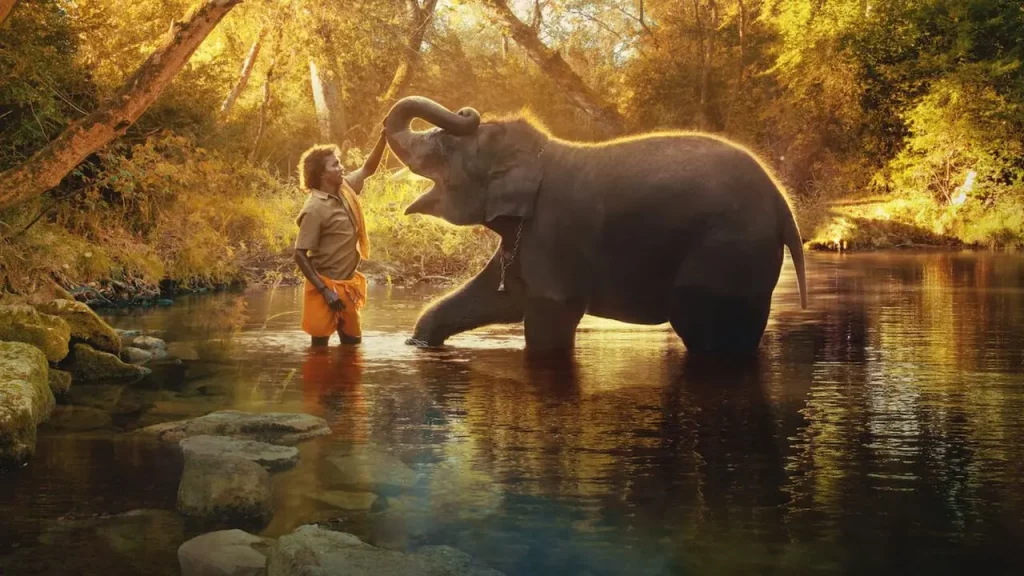
Elephants are led to the Moyar River, where they eagerly step into the cool water. Some lie down completely, rolling like oversized children enjoying a mud bath.
Mahouts scrub their thick skin using coconut husks and brushes.
Visitors may sometimes help splash water or scrub an elephant’s back.
The elephants clearly enjoy it.
They spray water with their trunks, flop into the river, and occasionally drench anyone standing nearby.
It is impossible not to smile.
Understanding Elephant Behavior
Spending time with elephants reveals fascinating insights about their intelligence and social structure.
Elephants are among the most emotionally complex animals on Earth.
They exhibit:
- Empathy
- Grief
- Cooperation
- Long-term memory
- Strong family bonds
Female elephants live in matriarchal herds led by an experienced female.
Male elephants eventually leave the herd and live solitary or semi-solitary lives.
Elephants communicate through:
- Low-frequency rumbles
- Body posture
- Ear movements
- Trunk gestures
Some of their vocalizations travel several kilometers through the ground.
Mahouts often claim they can recognize their elephant’s mood instantly.
And after spending even a few hours around them, visitors start noticing subtle differences too.
The Mahouts: Keepers of Ancient Knowledge
Behind every elephant stands a mahout.
These handlers often inherit the profession through generations. Their knowledge of elephant behavior is deeply rooted in tradition and daily interaction.
A mahout’s life revolves around the elephant.
They wake up early to feed it.
They walk with it through the forest.
They bathe it in rivers.
They monitor its health and moods.
Over time, an extraordinary bond develops.
Some mahouts say they can understand their elephant’s feelings better than words.
And elephants remember their mahouts for decades.
Afternoon Safari in Mudumalai
After the morning elephant session, the afternoon often brings another adventure — a forest safari.
Mudumalai offers jeep and bus safaris that take visitors deep into the reserve.
The safari trails wind through forests and grasslands, offering opportunities to spot wildlife.
Common sightings include:
- Spotted deer grazing in herds
- Peacocks displaying their feathers
- Malabar giant squirrels leaping between trees
- Wild boars rooting in the soil
If you are lucky, you might also see:
- Gaur (massive Indian bison)
- Sloth bears
- Leopards resting on branches
- Wild dogs hunting in packs
And sometimes, elephants appear suddenly along the trail.
Unlike the trained elephants in camps, these are wild herds.
Watching them in their natural habitat is a powerful experience.
Sunset in the Nilgiri Forest
As evening approaches, the forest transforms again.
The sunlight becomes golden.
Dust particles glow in the air.
Bird calls echo across the trees.
This is one of the best times for photography.
Elephants walking through sunset-lit grasslands create unforgettable silhouettes.
It is also when the forest feels most mysterious.
Predators begin to stir.
Shadows stretch across the landscape.
And somewhere deep in the jungle, a tiger may be watching.
Tribal Stories of the Forest
Mudumalai is also home to several indigenous communities.
Tribes such as the Kurumba, Irula, and Toda have lived in the Nilgiri forests for centuries.
Their lives are deeply connected to the land.
Traditional knowledge includes:
- Herbal medicine
- Animal tracking
- Forest ecology
- Sustainable resource use
Many tribal communities now collaborate with conservation programs and eco-tourism initiatives.
Listening to their stories offers a deeper understanding of how humans and wildlife have coexisted in these forests for generations.
Night in the Wilderness
Nightfall in Mudumalai is magical.
Without city lights, the sky fills with stars.
The Milky Way often becomes visible on clear nights.
Around forest lodges, campfires crackle as travelers share stories of the day’s adventures.
But the real magic lies beyond the firelight.
The forest becomes a different world at night.
Owls glide silently through the darkness.
Civet cats roam near clearings.
And elephants move quietly through the trees.
If you listen carefully, you may hear their deep rumbling conversations carried by the night air.
Day Two: Walking With Elephants
On the second morning, some camps allow guided elephant walks.
These walks offer a chance to observe how elephants move through the forest.
They walk slowly but purposefully.
Their trunks constantly explore the environment.
They break branches, smell the air, and communicate with each other through soft rumbles.
Walking beside them, you begin to appreciate their intelligence and calm presence.
It feels less like following an animal — and more like accompanying an ancient forest guardian.
Conservation and the Future of Elephants
India holds nearly 60% of the world’s Asian elephant population.
But elephants face serious challenges.
Major threats include:
- Habitat fragmentation
- Human-elephant conflict
- Railway accidents
- Poaching
- Expanding agriculture
Protected areas like Mudumalai are crucial for elephant survival.
Conservation efforts focus on:
- Maintaining wildlife corridors
- Reducing human-elephant conflict
- Monitoring elephant populations
- Community awareness programs
Responsible tourism also plays a role.
When travelers choose ethical wildlife experiences, they support conservation initiatives and local communities.
Best Time to Visit Mudumalai
Mudumalai is open throughout most of the year, but each season offers a different experience.
October to February (Winter)
Cool weather and excellent wildlife sightings.
March to May (Summer)
Animals gather around water sources, increasing safari success.
June to September (Monsoon)
The forest becomes lush and beautiful, though safaris may be limited.
Travel Tips for Your Mudumalai Weekend
If you plan to experience elephant whispering in Mudumalai, keep these tips in mind:
- Book forest lodges in advance
- Respect wildlife and maintain distance
- Avoid loud noises during safaris
- Wear neutral-colored clothing
- Carry binoculars and a camera
- Follow instructions from forest guides
Most importantly, approach the experience with patience.
Wildlife encounters cannot be rushed.
Why Elephant Whispering Changes You
Spending time with elephants changes the way you see the natural world.
These animals are not just symbols of strength or cultural icons.
They are intelligent, emotional beings with complex lives.
Watching them interact with each other — touching trunks, communicating through low rumbles, protecting their young — reveals a deep social intelligence.
It also reminds us how fragile our natural ecosystems are.
In a world rushing toward urban expansion and digital distraction, the forests of Mudumalai offer something rare:
Silence.
Connection.
Perspective.
Leaving the Forest
At the end of the weekend, leaving Mudumalai feels strangely emotional.
The road winds back through the Nilgiri hills.
Tea plantations return.
Cities reappear.
But something inside you remains in the forest.
Perhaps it is the memory of a giant elephant quietly walking beside a river.
Or the echo of a distant trumpet call at dusk.
Or the realization that the wild world still exists — fragile yet powerful.
And maybe, just maybe, you will return someday.
Because once you have heard the whispers of elephants, the forest never truly leaves you.
Leave a Reply