Karnataka is a state where history is not tucked away behind glass. It stands in open courtyards, clings to rocky hilltops, echoes in domed chambers, and lives inside temple towns that still wake up to bells and lamps. For travelers, that means you can build an itinerary that feels like time travel without ever leaving one state: prehistoric rock shelters, early experiment temples, medieval royal capitals, Deccan sultanate cities, island forts, and princely palaces from the colonial era.
This guide highlights some of the most memorable historical places to visit in Karnataka, along with practical ideas for planning your route. You do not need specialized knowledge to enjoy these sites. The monuments are powerful on their own, but a little context helps you notice what makes each one unique: a sculptural motif, a tower style, a defensive trick, or a river’s role in a city’s rise. Pack comfortable shoes, carry water, and give yourself permission to move slowly. Karnataka rewards slow travel more than fast sightseeing.
Best time to visit: October to February for most inland sites; coastal heritage is pleasant for longer, but monsoon humidity can affect long walks.
Why Karnataka Feels Like a Heritage Powerhouse
Karnataka sits at a cultural crossroads of the Deccan plateau and the coastal Konkan belt. The Western Ghats create a green, rain-fed corridor to the west, while the interior opens into drier landscapes where long-distance routes once moved horses, spices, cotton, metalwork, and ideas. Over centuries, different dynasties competed and collaborated here, leaving behind layered architecture that ranges from rock-cut caves to star-shaped temples and imposing forts.
Equally important is continuity. Many of Karnataka’s greatest monuments are still living spaces. A temple can be both a protected heritage structure and a functioning community center. A bazaar street can still follow a plan laid out in a medieval capital. This living aspect changes how you visit: you may remove shoes, dress modestly, avoid certain photography zones, or time a visit around rituals. In exchange, the past feels close, not distant.
Historical Places to Visit in Karnataka, India: A Heritage Lover’s Guide
Karnataka is one of India’s richest states when it comes to heritage tourism, offering a remarkable variety of historical places to visit in Karnataka that reflect centuries of art, culture, religion, and royal power. From the UNESCO World Heritage ruins of Hampi, the glorious capital of the Vijayanagara Empire, to the ancient rock-cut caves of Badami, Karnataka’s historical places attract travelers, historians, and architecture lovers alike. Iconic temple towns such as Belur and Halebidu showcase exquisite Hoysala architecture, while Pattadakal and Aihole highlight the evolution of Indian temple design. Majestic forts like Chitradurga Fort and historic cities such as Vijayapura, home to the famous Gol Gumbaz, add to the appeal of Karnataka’s heritage landscape. Royal landmarks including Mysuru Palace and spiritual centers like Shravanabelagola further strengthen Karnataka’s reputation as a top destination for history lovers. With its blend of ancient temples, grand forts, royal palaces, and archaeological wonders, historical places to visit in Karnataka offer an unforgettable journey through India’s glorious past and make the state a must-visit for heritage tourism.
- Hampi: The Ruined City of the Vijayanagara Empire
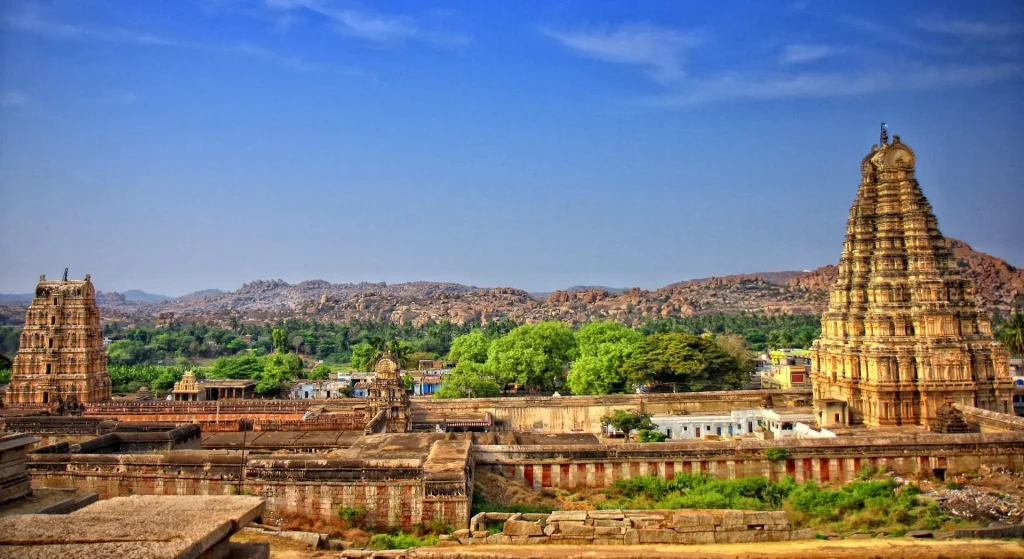
Hampi is the most iconic historical destination in Karnataka, and for good reason. It was the capital of the Vijayanagara Empire, a powerhouse of southern India that flourished between the 14th and 16th centuries. Even in ruin, the city’s scale is staggering. Granite boulders the size of houses form a dramatic landscape, and within that landscape lie temples, royal complexes, market streets, pavilions, water systems, and ceremonial platforms.
Start at the Virupaksha Temple, which remains an active place of worship. Its towering gopuram anchors the town’s skyline and introduces you to the city’s sacred heart. Walk down the old bazaar street and imagine it filled with traders, textiles, and everyday noise. Then head toward the Vittala Temple complex, famous for the stone chariot and the delicately carved halls. The musical pillars are often discussed, but what stays with most visitors is the harmony of proportion: heavy stone that somehow looks graceful.
For a different side of Hampi, explore the Royal Enclosure. Here you will find the Mahanavami Dibba, a high platform associated with royal ceremonies, along with gateways and traces of palatial planning. The Queen’s Bath, with its arched corridors and pool-like center, hints at luxury amid the otherwise rugged terrain. Across the river, the quieter Achyutaraya Temple area and the hillside views around Anjanadri add breathing space and fewer crowds.
Interesting things to do in Hampi include exploring Hampi is like stepping into a vast open-air museum where every path leads to history, adventure, and quiet wonder. One of the most interesting things to do in Hampi is wandering through the ruins of the Vijayanagara Empire, especially around the Vittala Temple complex with its iconic stone chariot and intricately carved halls. Watching sunrise or sunset from Matanga Hill or Hemakuta Hill is a must, as the golden light transforms the boulder-strewn landscape into something almost surreal. You can also take a coracle boat ride on the Tungabhadra River, offering a peaceful perspective of temples, ghats, and riverside life. Cycling or scootering between monuments adds a sense of freedom, while exploring ancient bazaar streets helps you imagine the city’s vibrant trading past. For those who enjoy slower moments, simply sitting among the ruins, listening to the wind and temple bells, is an experience that makes Hampi unforgettable.
If you can, watch sunrise from Matanga Hill or Hemakuta Hill, when the boulders turn gold and the ruins look like they are emerging from the earth. Hampi is best experienced over two to three days, because rushing turns it into a checklist. Slow down, sit near the river, and let the city’s geometry reveal itself.
Practical tip: Rent a bicycle or scooter for distances, but plan to walk inside major complexes. Carry water and take midday breaks, especially in summer.
- Badami: Rock-Cut Caves Above Agastya Lake
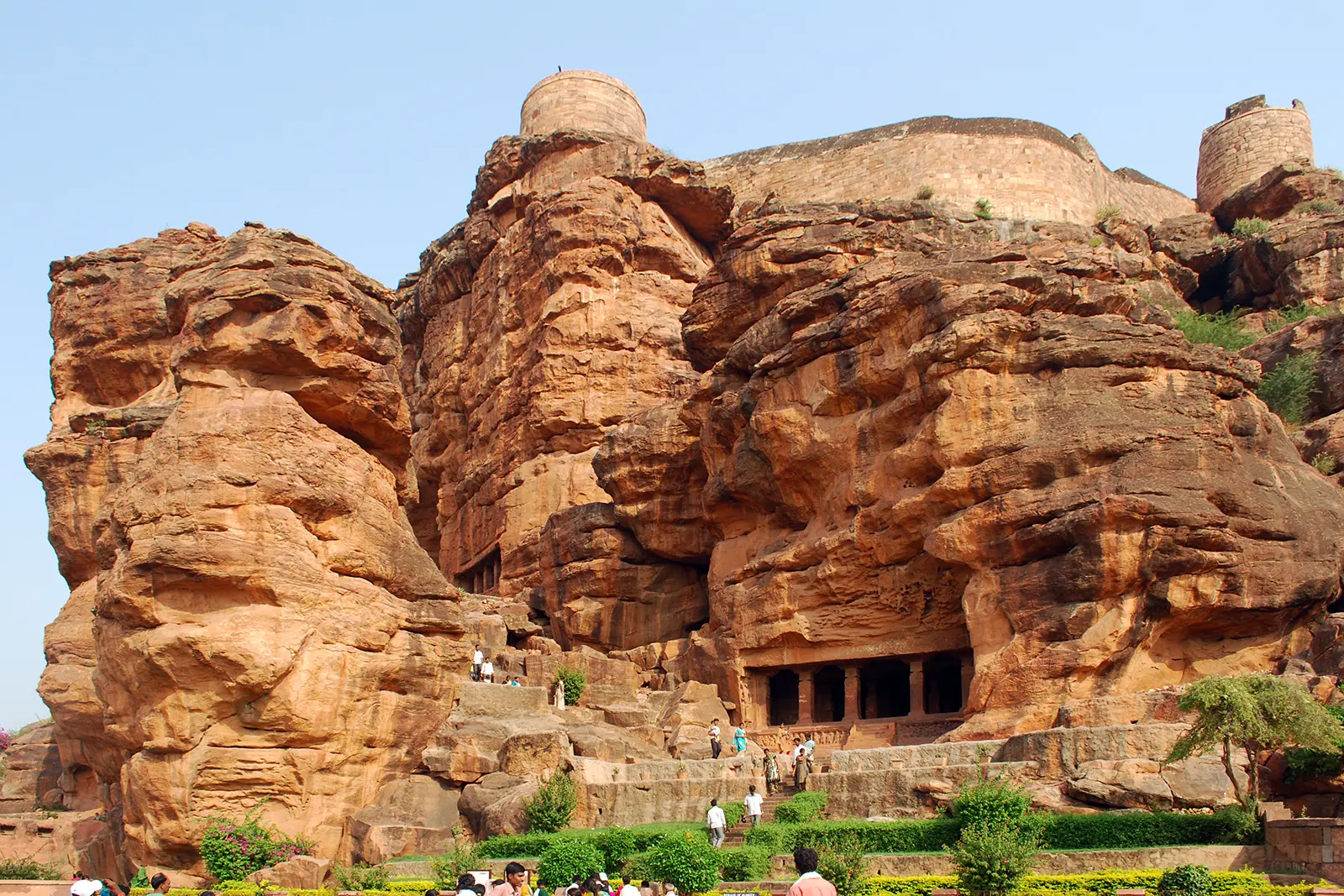
Badami was the capital of the Early Chalukyas, and its cliffside caves are among the most accessible introductions to early Deccan art. Carved into red sandstone above Agastya Lake, the four main caves display a confident blend of engineering and storytelling. Cave 1 is dedicated to Shiva, with dramatic reliefs of Nataraja and other forms. Cave 2 and Cave 3 focus on Vishnu and show richly carved panels that demonstrate how artists used depth to create movement. Cave 4 is Jain, offering a quieter, austere contrast.
Badami’s magic is also its setting. As you climb, the lake opens below, framed by temples and old structures. Across the water, the Bhutanatha temples sit near the shoreline, especially beautiful in the late afternoon when the sandstone glows warm. The climb itself is part of the experience: you pass small shrines, steps worn by generations, and viewpoints that help you understand why capital cities were often placed where natural drama reinforced royal authority.
Practical tip: Visit early in the day for gentler light and fewer crowds. Wear shoes that are easy to remove when entering sacred spaces.
- Pattadakal: UNESCO Heritage of Temple Styles
Pattadakal is a UNESCO World Heritage Site and one of the clearest places in India to compare northern and southern temple styles side by side. Chalukyan kings used Pattadakal as a ceremonial center, and the temple cluster reads like a catalogue of architectural experiments. The site is compact enough to explore on foot, yet dense enough that you could spend hours noticing differences in tower shapes, wall articulation, and sculptural themes.
The Virupaksha Temple is the centerpiece, commissioned by Queen Lokamahadevi to commemorate a victory. Inside and out, its carvings depict episodes from epics and puranic stories with remarkable clarity. Nearby, the Mallikarjuna Temple echoes similar planning on a slightly smaller scale. The Sangameshwara, Kashivishwanatha, and Papanatha temples each present variations in layout and decorative emphasis. Papanatha, in particular, shows a feeling of transition and blending, as if the builders were negotiating between traditions.
Practical tip: A local guide is worth it here. Understanding what to look for turns the visit from “beautiful stone” into a story of innovation.
- Aihole: The Temple Laboratory
Aihole is often called the cradle or laboratory of Indian temple architecture. Instead of one grand monument, you get dozens of shrines scattered across an ordinary village landscape. This is where early builders tested forms, proportions, and roof lines, gradually moving from simpler halls to more complex temple plans.
Begin at the Durga Temple, notable for its apsidal shape and surrounding colonnade. Despite the popular name, it is not primarily a Durga shrine; the name likely comes from the fort-like enclosure. Then visit the Lad Khan Temple, which resembles a pillared hall and reveals how early stone architecture borrowed from wooden structures. The Meguti Jain Temple on a hill provides views over the area and helps you understand the spread of monuments. The small museum on site is useful for studying sculptures up close.
Practical tip: Aihole, Pattadakal, and Badami form a perfect heritage triangle. If you have limited time, plan them as a two-day circuit with early starts.
- Belur: Hoysala Sculpture Like Carved Poetry
Belur’s Chennakesava Temple is one of the finest achievements of the Hoysala dynasty. Built in the 12th century, it is famous for detail so dense that the stone seems to behave like fabric. The temple stands on a raised platform, inviting you to circle it slowly. Along the base, friezes of elephants, horses, and scrolling foliage create rhythmic bands. Above them, narrative panels and deities appear with expressive faces and precise ornamentation.
Inside, the hall’s polished pillars look almost metallic. The bracket figures, known as madanikas, are celebrated for their grace: dancers, musicians, and women captured in lively poses. The artistry is not just decorative. It communicates a worldview where devotion, beauty, and craftsmanship belong together. Because Belur is still a living temple, you will also see worshippers and rituals that connect the monument to present-day community life.
Practical tip: Visit in the morning for softer light. If you enjoy photography, take time on the outer walls first, then step inside when your eyes have adjusted to detail.
- Halebidu: A Ruined Capital with Intact Genius
A short drive from Belur, Halebidu was once the Hoysala capital. The Hoysaleswara Temple is the main draw, and it often leaves visitors stunned. The exterior walls are carved so densely that you may not know where to begin. Here are fierce forms of Shiva, playful scenes from epics, elegant dancers, and bands of geometric patterns that act like visual music.
Halebidu’s ruins add atmosphere. Portions of the site show signs of damage and incomplete restoration, which makes you imagine what the capital might have looked like at its height. Nearby, the Jain Basadi complex offers a different aesthetic: simpler lines, calmer spaces, and an emphasis on quiet devotion. Together, Belur and Halebidu tell a story of a dynasty that invested deeply in art as a form of statecraft.
Practical tip: Do not rush Halebidu. The site rewards repeated viewing. A guide or audio explanation helps you connect panels to stories.
- Shravanabelagola: The Monolithic Statue of Gomateshwara
Shravanabelagola is among the most important Jain pilgrimage sites in India, and its most famous landmark is the towering monolithic statue of Gomateshwara (Bahubali). Carved from a single block of granite, the statue stands on Vindhyagiri Hill and embodies the Jain ideals of renunciation and calm. The figure’s serene expression and upright posture, combined with the open sky, create a powerful sense of stillness.
The climb to the statue involves many steps, and along the way you pass inscriptions, small shrines, and viewpoints that open onto the surrounding countryside. On special occasions, especially during the Mahamastakabhisheka festival held roughly every twelve years, the hill becomes a center of large-scale devotion, with ceremonial anointing that draws pilgrims from far beyond Karnataka. Even on ordinary days, the site carries a pilgrim energy that makes it feel alive rather than museum-like.
Practical tip: Start early to avoid heat on the steps. Carry water, wear modest clothing, and plan a relaxed pace for the climb and descent.
- Srirangapatna: River Island Fort and the World of Tipu Sultan
Srirangapatna, set on an island in the Kaveri River, is compact, walkable, and historically rich. It was a strategic stronghold for the Mysore kingdom, and it holds layers from the Wodeyar period and the era of Hyder Ali and Tipu Sultan. The fort’s gateways, walls, and inner streets offer a sense of how river geography shaped defense.
Key stops include the Daria Daulat Bagh, Tipu’s summer palace, known for its painted interiors that depict court life and battles. The Gumbaz, Tipu Sultan’s mausoleum, is set in a garden-like space and feels contemplative. Inside the fort, the Ranganathaswamy Temple adds a deeper timeline, reminding you that the island’s sacred importance predates its military role. The marked site associated with Tipu’s final battle during the Fourth Anglo-Mysore War adds a sobering note, linking local conflict to global power.
Practical tip: Srirangapatna pairs well with Mysuru. Combine it with an afternoon at Mysuru Palace or a sunset visit to the city markets.
- Mysuru Palace: Princely India in Technicolor
Mysuru Palace is not ancient, but it is historically essential. The current structure, completed in the early 20th century after an earlier palace burned down, represents the Wodeyars’ vision of modern royal grandeur. Its style is often described as Indo-Saracenic, blending domes, arches, and ornate interiors with a theatrical sense of spectacle. The palace is especially famous during the Dasara season, when Mysuru celebrates with processions and the palace is illuminated with thousands of lights.
Inside, you will find ceremonial halls, carved doors, patterned floors, and stained-glass touches that capture an era when princely states balanced tradition with new influences. Visiting the palace helps you understand how heritage did not stop at medieval ruins; it continued into the colonial period and shaped modern Karnataka’s cultural identity.
Practical tip: Tour the interiors earlier in the day, then return in the evening if illumination is scheduled. Keep an eye on entry rules, as they can vary by season.
- Vijayapura (Bijapur): Domes, Whispering Galleries, and Deccan Courts
Vijayapura, historically called Bijapur, was the capital of the Adil Shahi dynasty and remains one of the Deccan’s great monument cities. The architecture here feels different from temple towns: more austere, more expansive, and deeply influenced by Persianate aesthetics, yet still grounded in local craft traditions.
The Gol Gumbaz is the headline monument, a mausoleum crowned by an enormous dome. Standing inside the central chamber, you feel the scale in your body. The whispering gallery is a popular highlight, but the true wonder is the engineering confidence: thick walls, soaring volume, and a sense of controlled emptiness. Another must-visit is the Ibrahim Roza, a beautifully proportioned tomb-and-mosque complex with fine stonework and a more delicate mood than Gol Gumbaz. Add the Jama Masjid, gateways, citadel remains, and you begin to see how Vijayapura functioned as a courtly city, not only a collection of monuments.
Practical tip: The sights are spread out. Hire an auto or taxi for a half-day loop, and carry sun protection because the open plains can be intense.
- Kalaburagi (Gulbarga): Bahmani Foundations and Fort Walls
Kalaburagi, once known as Gulbarga, was the first capital of the Bahmani Sultanate. It is less visited than Vijayapura, which makes it appealing if you enjoy quieter exploration. The Gulbarga Fort has thick walls, a wide perimeter, and a powerful presence. Inside, the Jama Masjid stands out for its unusual covered design, which creates a shadowed, enclosed atmosphere rather than the open courtyard typical of many mosques.
Kalaburagi is also significant for its Sufi heritage. The dargah of Khwaja Bande Nawaz, a revered Chishti saint, draws pilgrims and reflects how spiritual networks shaped the Deccan alongside political power. Visiting both fort and shrine in one day offers a balanced picture of governance, faith, and community.
Practical tip: If you are already traveling through northern Karnataka by train, Kalaburagi makes a meaningful stopover that adds depth to a Deccan itinerary.
- Chitradurga Fort: Seven Lines of Defense on Stone Hills
Chitradurga Fort is among Karnataka’s most dramatic fortifications. Built and expanded over centuries, it is often described as a fort with seven concentric walls, each adding another ring of defense. The fort sits on rocky hills, and the builders cleverly used boulders as natural bastions. As you walk through gates and corridors, you begin to see how architecture and terrain were designed to slow invaders, control movement, and protect water.
Inside the complex are temples, water tanks, granaries, and narrow passages that feel like puzzles. Legends bring extra color, especially the story of Onake Obavva, celebrated for defending a hidden entrance with a pestle. Whether you come for history, engineering, or panoramic views, the fort delivers a sense of scale and strategy that is very different from temple architecture.
Practical tip: Wear sturdy footwear and carry water. Start early, as the climb and exploration can take several hours.
- Kittur Fort: Rani Chennamma and the Memory of Resistance
Kittur’s historical importance is tied to Rani Chennamma, who led an early rebellion against the British East India Company in the 19th century. The Kittur Fort ruins are not as grand as Chitradurga’s, but they carry strong emotional resonance. Walls, bastions, and gateways connect directly to a story of political assertion and local courage. Nearby temples and memorial structures help keep the narrative alive, and local museums or interpretive displays, when available, provide additional context.
Kittur is a reminder that “historical places” are not only medieval capitals. They can also be sites of modern struggle, where communities remember resistance and identity. Visiting with this perspective turns a small fort into a meaningful chapter in India’s broader freedom movement timeline.
Practical tip: Kittur works well on a road trip through Belagavi district. Combine it with other nearby heritage sites for a fuller day.
- Bengaluru’s Heritage Core: Kempegowda, Tipu, and the Colonial City
Bengaluru is often associated with technology, but its historic layers are easy to miss only because the city moves fast. Start with the Bengaluru Fort area, linked to Kempegowda, the city’s founder, and later strengthened by Hyder Ali and Tipu Sultan. Although much has changed, the fort region connects you to the old pete market neighborhoods, where traditional trade streets still pulse with life.
Basavanagudi’s Bull Temple, dating to the 16th century, anchors a classic old Bengaluru neighborhood. Nearby, you can explore streets lined with older houses, small eateries, and local shops that keep heritage in daily use. For colonial-era stories, the cantonment side of the city offers churches, cemeteries, and institutions that reflect British influence. Bangalore Palace adds another angle, showing how princely families adopted European styles to project status. Even a walk around Cubbon Park and an exterior look at the Vidhana Soudha can help you see how civic architecture continued evolving after independence.
Practical tip: Try a guided heritage walk on a weekend morning. Traffic is lighter, and a guide can connect scattered landmarks into one coherent story.
- Coastal Heritage: Udupi, Barkur, and Maritime Memory
Karnataka’s coast is famous for beaches and cuisine, but it also holds deep historical layers. Udupi’s Sri Krishna Matha is a living religious institution tied to philosophy, ritual, and community kitchens. Visiting offers insight into how monastic systems shaped education and social life. The town’s cultural identity is inseparable from its temple traditions, and the experience is as much about atmosphere as architecture.
For an older, quieter heritage detour, visit Barkur near Udupi, once an important regional town with temples, inscriptions, and remnants that hint at trade and administration. Coastal weather can soften stone detail, but it also adds a distinctive mood: palm-lined roads, river landscapes, and a sense of maritime connection. If time allows, expand your coastal heritage route toward Moodabidri’s Jain temples or Mangaluru’s older port narratives to understand how the sea influenced politics and culture.
Practical tip: Balance temple visits with relaxed coastal evenings. The combination keeps the trip from feeling like nonstop monument-hopping.
- Bidar: A Fort on the Edge of the Deccan
In the far north of Karnataka, Bidar feels like a city looking both inward and outward. It has long sat near cultural borders, absorbing influences from the Deccan sultanates and from older local traditions. The Bidar Fort is the main attraction, a vast complex with multiple gateways, courtyards, and remains of palaces, mosques, and administrative buildings. While parts are weathered, the fort still communicates an idea of layered defense: moats, thick walls, and controlled entry points that would have made attacks expensive and slow.
Inside the fort, look for traces of decorative tile work and carved stone details that hint at the refinement of court life. The Rangin Mahal area, where surviving ornamentation can be seen, is especially evocative. Beyond the fort, Bidar’s stepwells and water systems tell a parallel story. Water was power in a plateau city, and structures like the Bahmani-era wells and reservoirs show how rulers invested in engineering that served both elites and ordinary residents.
Practical tip: Bidar works best as a one-night stop if you are exploring northern Karnataka. Try to visit the fort in the cooler morning hours and leave time for a stepwell or two in the afternoon.
- Banavasi: An Ancient Town with Quiet Depth
If you want a historical place that does not feel crowded, consider Banavasi. Often described as one of Karnataka’s oldest towns, Banavasi is associated with early dynasties and an enduring temple tradition. The Madhukeshwara Temple is the central landmark, and its layered construction reflects centuries of patronage and renovation. The town’s slower rhythm makes it a good place to experience how heritage can be woven into everyday life: you might see morning prayers, local markets, and simple streets that still revolve around the temple.
Banavasi also works as a gateway to the western Karnataka landscape, where dense greenery, river crossings, and small heritage pockets appear between forests and fields. Even if you are not chasing grand monuments, visiting Banavasi can balance a trip that otherwise focuses on large UNESCO sites. It reminds you that history is not always dramatic; sometimes it is steady.
Practical tip: Pair Banavasi with a drive through the Western Ghats or with other heritage towns in the region if you want a softer, nature-and-history blend.
- Moodabidri: Jain Heritage and Temple Town Craft
Moodabidri, sometimes called a Jain center of the coast, is known for its basadis, or Jain temples, that preserve a rich tradition of art and scholarship. The Thousand Pillars Temple (Saavira Kambada Basadi) is the best-known site, admired for its intricately carved pillars and calm interior spaces. Even if you have visited grand Hindu temples elsewhere, Jain basadis offer a different mood: quieter, more meditative, and often focused on finely detailed craftsmanship rather than large-scale spectacle.
A visit here also helps you understand Karnataka’s religious diversity. Jain communities played significant roles in trade, learning, and patronage across the region, and their monuments are part of the same historical fabric as royal capitals and hill forts. Spend time noticing the symmetry, the restrained iconography, and the way light falls through pillared corridors.
Practical tip: Combine Moodabidri with a coastal trip through Mangaluru and Udupi. It adds an inland cultural stop to a beach-heavy itinerary.
- Somanathapura: A Compact Hoysala Gem Near Mysuru
Somanathapura is a smaller Hoysala temple site that fits beautifully into a Mysuru-region plan. The Keshava Temple here is not as large as Belur’s, but it is exquisitely detailed and easier to absorb because the complex is compact. The temple’s star-shaped plan and the continuous sculptural bands around the exterior make it a perfect place to practice “slow looking.” Walk around the base multiple times and you will notice new details each loop: tiny musicians, floral patterns, episodes from epics, and repeating motifs that look like a stone-language of devotion.
Because the site is often less crowded than major hubs, it can feel intimate. You can stand close enough to study the precision of chisels and the logic of ornamentation. For travelers who love the Hoysala style, Somanathapura is a satisfying “bonus chapter” that rounds out the story told by Belur and Halebidu.
Practical tip: Visit in the morning and pair it with other Mysuru-area stops. A half day is usually enough, but it is easy to linger if you enjoy sculpture.
How to Plan Your Karnataka Heritage Itinerary
Karnataka is large, so the easiest way to plan is to cluster destinations into circuits. Here are three practical options:
Circuit A: The Chalukya Trail (3 to 5 days)
Base yourself in Badami or nearby towns, and cover Badami caves, Pattadakal, and Aihole. Add Mahakuta temples for a quieter, water-and-shrine atmosphere. If you have extra days, extend north to Vijayapura for Deccan sultanate architecture and a striking contrast in style.
Circuit B: The Hoysala Loop (2 to 4 days)
Start from Bengaluru, Hassan, or Mysuru. Visit Belur and Halebidu as a pair, add Shravanabelagola for Jain heritage, and include Mysuru Palace if you want a wider timeline. This circuit is ideal if you love sculpture and want a concentrated experience without long travel distances.
Circuit C: Hampi and Forts (3 to 6 days)
Make Hampi your anchor. Add Anegundi and across-the-river viewpoints, then drive toward Chitradurga Fort. If you want to connect more Deccan stories, consider linking Hampi to Vijayapura, which highlights the region’s shifting political landscapes after Vijayanagara.
When to Visit and How Long to Stay
October to February is the most comfortable season for inland monuments such as Hampi, Badami, Pattadakal, Aihole, Vijayapura, and Chitradurga. March to May can be brutally hot in the interior, and the experience becomes less enjoyable if you are constantly searching for shade. Monsoon months bring greener landscapes and dramatic skies, but they can make hill forts slippery and can complicate road travel in some pockets.
As a rule of thumb, allocate at least:
• 2 to 3 days for Hampi
• 2 days for the Chalukya triangle (Badami, Pattadakal, Aihole) if you start early
• 1 full day for Belur and Halebidu together
• 1 half day for Shravanabelagola
• 1 day for Vijayapura’s main monuments
Heritage Etiquette and Photography Tips
Many major sites in Karnataka are protected monuments, and several are active religious spaces. Follow signage, respect barriers, and avoid climbing on fragile structures. At temples, dress modestly, remove shoes where required, and be aware that some areas may restrict non-Hindus or restrict entry into inner sanctums. Always ask before photographing people, and avoid using flash on old paintings or inside darker halls.
Carry a reusable water bottle, sunscreen, and a hat. Even in cooler months, walking on stone platforms and open courtyards can feel surprisingly dehydrating. If you hire a guide, treat it as part of heritage preservation: local guiding supports community livelihoods and often improves visitor behavior through context.
Food and Local Experiences that Add Depth
Karnataka’s historical travel is also cultural travel, and food is one of the fastest ways to feel that culture. In temple towns, try traditional vegetarian meals served on banana leaves, often featuring rice, sambar, seasonal vegetables, and sweet dishes. In coastal areas, coconut and seafood define many flavors, and Udupi cuisine is famous for its balanced spice and comfort. In the north, look for jowar roti, spicy brinjal preparations, and hearty snacks that suit the drier climate.
Beyond food, consider timing visits around local festivals. Hampi’s surroundings can become especially lively during cultural events, while Mysuru’s Dasara is a major seasonal highlight. Even small-town fairs near temples can give you glimpses of folk traditions that connect directly to the monuments you are visiting.
Closing Note: Travel with Time in Mind
Karnataka’s historical places are more than scenic stops. They are archives built from stone, water management, trade ambition, religious devotion, and political conflict. They show how artisans solved structural problems, how patrons expressed power, and how communities continued rituals across centuries. When you visit, leave room for stillness. Sit in a mandapa and listen to footsteps. Watch evening light slip over a fort wall. Notice how a river shapes a city’s logic.
If you travel through Karnataka with patience, the state offers a rare gift: you can feel the past as a texture, not just a topic. Each site, from Hampi’s grand avenues to Aihole’s early experiments, adds a piece to a long, complex story. Go with curiosity, treat the monuments gently, and you will return with memories that feel both personal and ancient.
A Simple 7-Day Heritage Route Idea
If you want a clear plan that covers variety without constant packing and unpacking, consider this seven-day structure:
Day 1: Bengaluru heritage core, with a market walk and an evening food stop.
Day 2: Drive to Mysuru, visit Mysuru Palace, and end with a calm stroll.
Day 3: Srirangapatna in the morning, then add Somanathapura or Shravanabelagola depending on your interests.
Day 4: Travel toward Hassan region and cover Belur and Halebidu with an overnight nearby.
Day 5: Long drive to Hampi, arrive by evening, and take a gentle riverside walk.
Day 6: Full day in Hampi, focusing on major temples, bazaars, and sunset viewpoints.
Day 7: Hampi morning exploration, then depart with a stop at Chitradurga Fort if your route allows.
This route balances temples, forts, and palaces, and it minimizes backtracking. If you prefer the Chalukya triangle instead of Hoysala sites, swap Days 4 and 5 for Badami, Pattadakal, and Aihole, then continue to Hampi.
Responsible Heritage Travel
Historical places last longest when visitors act like caretakers rather than consumers. Avoid scratching names, climbing on fragile carvings, or picking up loose fragments. Do not feed monkeys at fort sites, as it creates harmful dependence and aggressive behavior. Carry a small bag for trash, support local guides, and buy crafts or snacks from local vendors when possible. If a site feels crowded, step aside to let others view carvings and take photos. Small choices add up, and your respectful behavior helps protect these places for future travelers.
Final planning tip: keep buffer time. Karnataka’s distances look short on maps, but road conditions, temple queues, and the temptation to stop for tea can stretch a day. Build one “free” hour into every major travel day. That way, you can catch golden light at a monument without turning the rest of your itinerary into stress for you and everyone.
Frequently Asked Questions
Is Karnataka good for first-time heritage travelers?
Yes. The sites are varied, the road networks between major circuits are generally manageable, and you can choose a style that suits you: ruins, temples, forts, or palaces. Starting with one circuit reduces fatigue and makes the experience richer.
Do I need a guide at every site?
Not at every site, but guides are extremely useful at sculpture-rich places like Pattadakal, Belur, and Halebidu, and in monument cities like Vijayapura where context helps you appreciate the Deccan sultanate era. If you prefer self-guided visits, read brief background notes before arriving and use museums to build visual literacy.
What should I pack for visiting historical places in Karnataka?
Comfortable walking shoes, modest clothing for temples, a hat, sunscreen, a reusable water bottle, and basic medicines for heat or digestion. A light rain jacket is helpful during monsoon or unseasonal showers. If you enjoy details, bring binoculars for high carvings and a small notebook for observations.
Can I do these trips from Bengaluru?
Yes. Belur, Halebidu, and Shravanabelagola can be done with an overnight or as long day trips depending on your pace. Mysuru and Srirangapatna are classic weekend routes. For Hampi and the Chalukya triangle, plan longer trips with at least two nights.
Leave a Reply